During our sessions, we get asked a lot about mobility and what kind of mobility or stretching routine is best.
First, let's clear up a common misconception:
Mobility and flexibility are not the same thing.
Flexibility refers to a muscle's ability to lengthen.
Mobility refers to your ability to move a joint through its full range of motion with control.
For example, being able to touch your toes is flexibility. Being able to squat deeply with good control is mobility.
Many people assume they need a 20 minute stretching routine every day to stay mobile. While stretching can certainly feel good and may have its place, maintaining mobility is often much simpler than that.
The best way to stay mobile is to keep moving.
Our bodies are designed to move, and the old saying "if you don't use it, you lose it" applies here. When we regularly move our joints through their full range of motion (ROM), we help maintain the mobility we already have.
This is one of the reasons we're such sticklers about exercise technique and moving through a controlled full range of motion at the gym.
When we encourage you to squat as deeply as your body allows, fully extend your arms during rows, or move through a complete range of motion during any exercise, we're not just thinking about muscles. We're helping you maintain the movement capabilities you'll rely on for everyday life for the rest of your life.
A lot of people fall into the habit of simply going through the motions. The weight moves, the reps get counted, and the workout gets completed. But when you consistently cut reps short or avoid ranges of motion you're capable of using, you're cheating yourself out of one of the biggest benefits of exercise.
Remember: your body adapts to what you ask it to do.
If you regularly move your joints through their full range of motion, your body gets the message that those positions are important and worth maintaining. If you stop using those ranges, your body has no reason to keep them.
That's why we care so much about things like depth on a squat, reaching full extension on a row, or controlling the lowering phase of an exercise, for example. We're not trying to make the workout harder for the sake of being hard. We're helping you preserve the ability to move well for years to come while also making sure you get the most bang for your buck.
Why does this matter? Because mobility affects things like:
• Getting up and down from the floor
• Reaching overhead cabinets
• Climbing stairs
• Bending down to tie your shoes
• Maintaining balance and coordination
• Staying independent as you age
The good news is that you don't need an elaborate mobility routine to maintain much of what you already have.
Regular exercise, strength training, walking, and simply moving your body through a variety of positions can go a long way.
Personally, if I had to choose between spending 15 minutes stretching or 15 minutes moving, strength training, walking, or performing controlled mobility exercises, I'd choose movement almost every time.
And that brings up one more important point. A lot of people assume that when they're injured, they should stop moving completely. While there are certainly injuries that require rest, many actually benefit from the right kind of movement. You've probably heard the sayings, "Movement is medicine" or "Motion is lotion." There's a lot of truth to both. Depending on the injury, keeping your body moving can help reduce stiffness, improve circulation, and support the healing process.
The challenge is knowing what movements will help your recovery and which ones might slow it down. That's why we always recommend out members see a professional to figure out exactly what is causing your pain and what the next steps are.
So that's my mobility spiel, let me leave you with this...
Keep moving.
Move often.
Move well.
And whenever possible, move through a full range of motion.
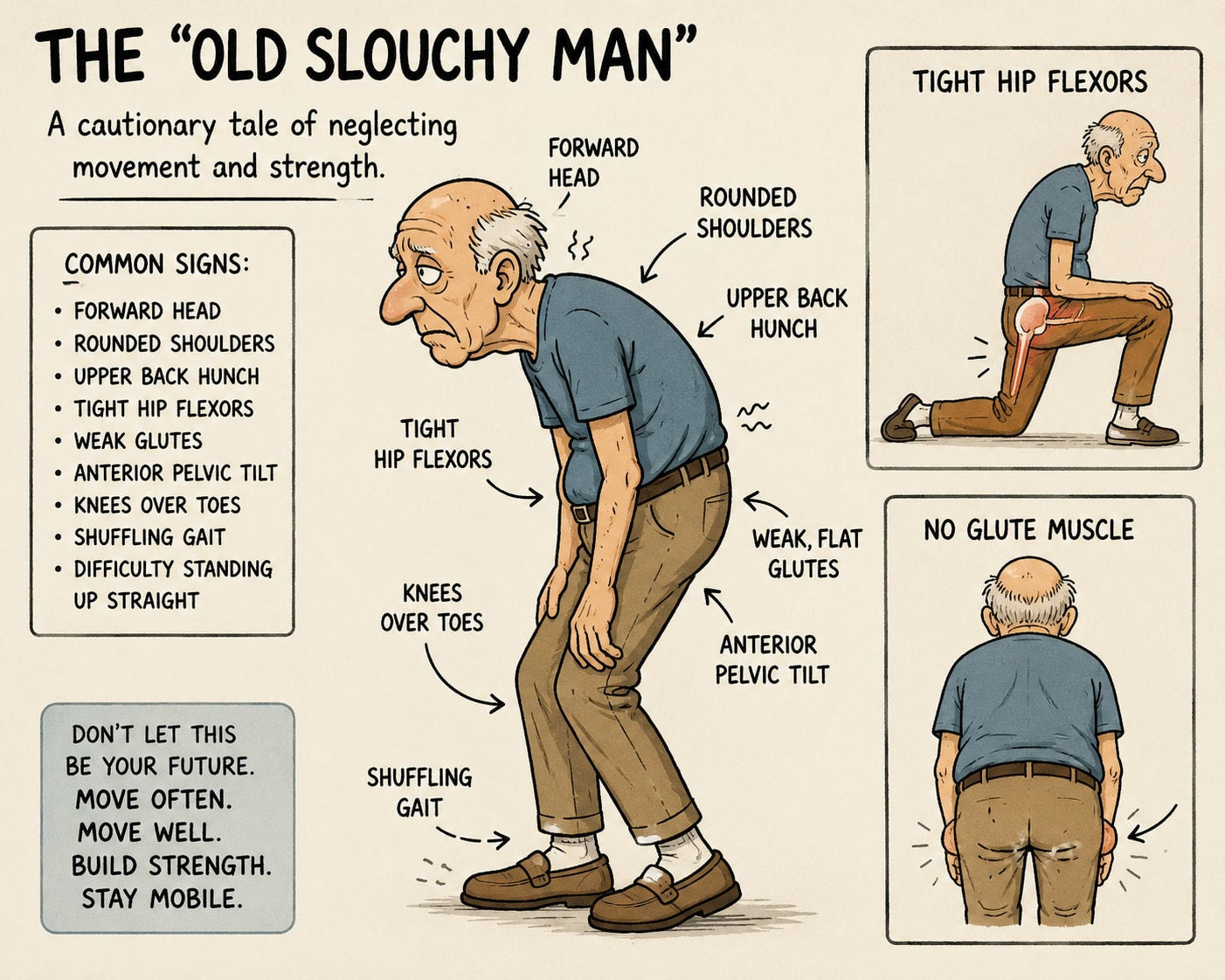
The goal isn't just to be stronger in the gym. The goal is to maintain the ability to confidently move through life and not to become this old slouchy man...